How our entire company learned to work with AI in three days

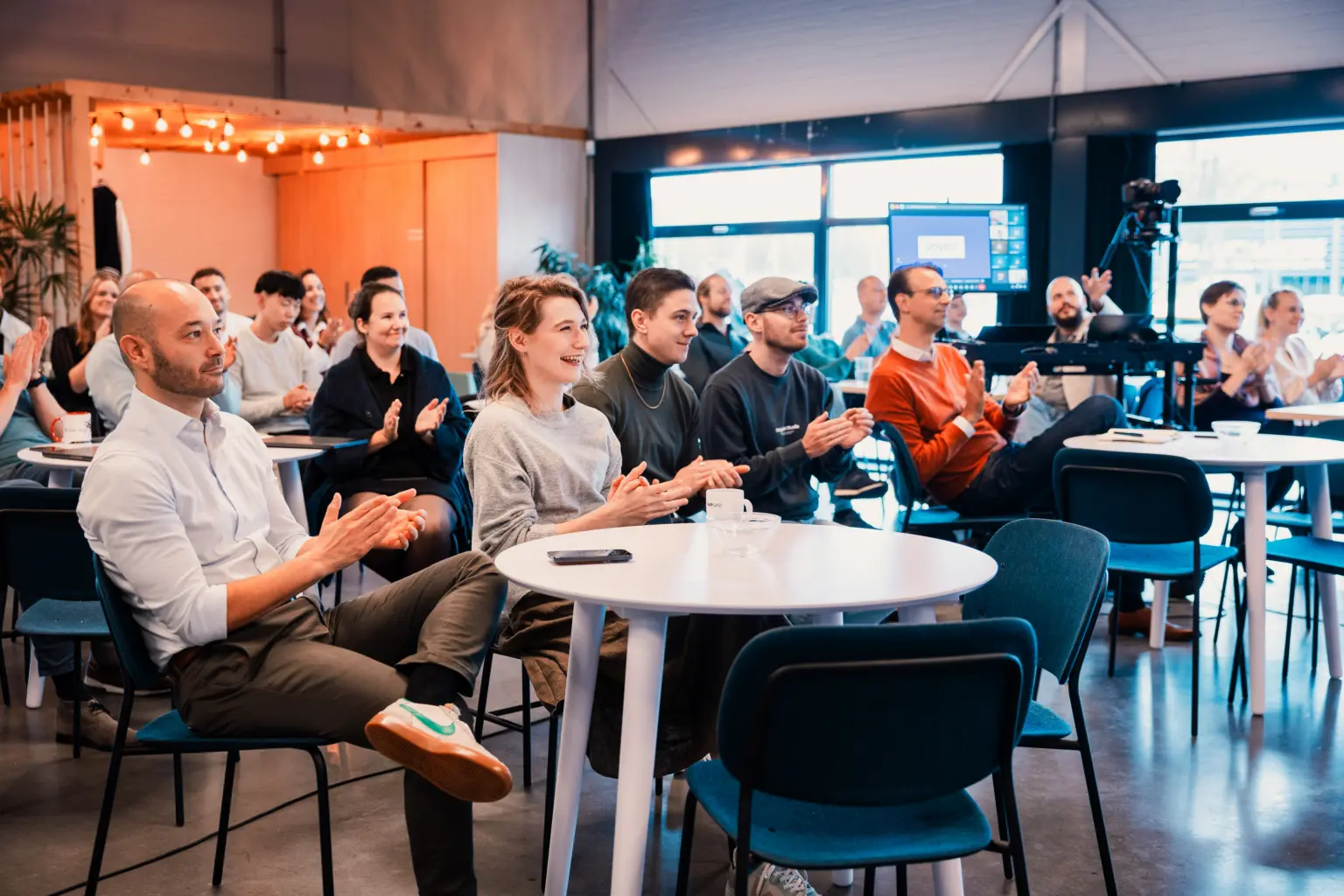
Thursday afternoon, 2 p.m. Sixteen teams are ready to present. No slides. No speeches. A working demo or nothing. That was the agreement.
Three days earlier, none of these teams existed. Some participants had never written a prompt before. And now they’re here, with software that works. Sixteen times over.
This blog is about our very first AI Discovery Lab: an AI hackathon for the entire organization. But the real story isn’t about AI.
It started twelve years ago
Twelve years ago, the first reports about AI appeared in our Slack. Three years ago, we launched our first AI feature: voicemails as text. Last month, the call transcription and summary features came out of beta and were named Voys Intelligence.
I have been playing with AI for years. The technology takes me to places I never thought possible. But exploring something individually is fundamentally different from seeing an entire organization discover it at the same time.
Why would you shut down an entire company for three days for an AI hackathon?
I often say that you can work in the company or on the company. The latter tends to be neglected for the sake of day-to-day operations. Unless you consciously make time for it.
Some colleagues use AI every day. Others had never touched it before. The AI Discovery Lab wasn’t about building production-ready software. It was a place to learn, experiment safely, and to build confidence in new technology and new ways of working together.
And sometimes you just need to play at work. Have some fun. Try something you don’t know will work. That’s not naive; that’s how 3M came up with the Post-it note.
Proper preparation makes all the difference.
Before you can do something like this, the organization has to be ready. At Voys, we value openness and trust. Our colleagues dare to make mistakes and try new things. That sense of security is crucial if you want an entire organization to experiment in unfamiliar territory.
We communicated very deliberately in advance: this may fail. Don’t fall in love with your prototype, because you’ll probably throw it away afterwards. What matters is that we learn together.
To get everyone on the same page, we organized pre-training sessions for different parts of the organization. About what AI can and cannot do. About how to talk to a machine. About local and secure AI, automation, RAG, vector databases, and about data, security, and privacy. That foundation made the difference between frustration and flow on day one.
The format: Startup Weekend, but with AI
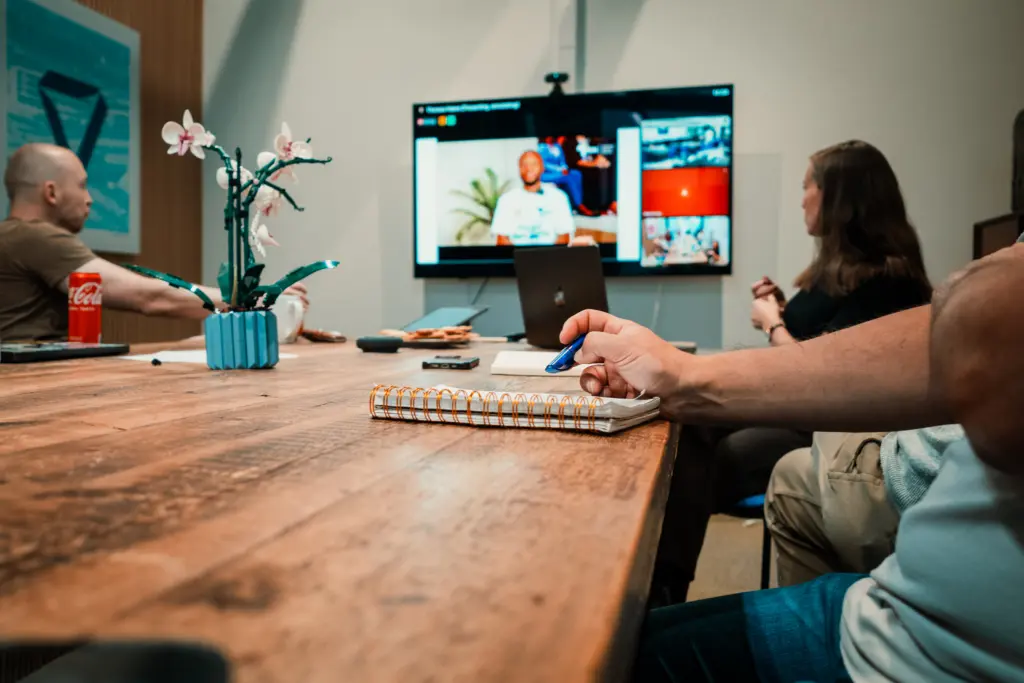
Tuesday morning was kick-off day. “Be back here on Thursday at 2 p.m. with a working demo. With a team of colleagues you’ll know better than you do today. With skills you don’t have yet.” That’s how Wouter opened the event, for which we used the Startup Weekend format.
Then 26 colleagues pitched different ideas they wanted to work on. Sixty seconds per pitch. A voting round followed, after which teams were formed around the best ideas. The only requirement: each team had to consist of a mix of business, developers, and creatives. More than 110 participants, at our office in Groningen and remotely, from Belgium and South Africa to Bali and Madeira. Seven coaches with different areas of expertise, from legal to prompting, were on hand to assist. We worked in sandbox environments with test data so that everyone could experiment without risk. The coaches observed with a fresh perspective and asked the right questions at the right time.
Sixteen working demos later
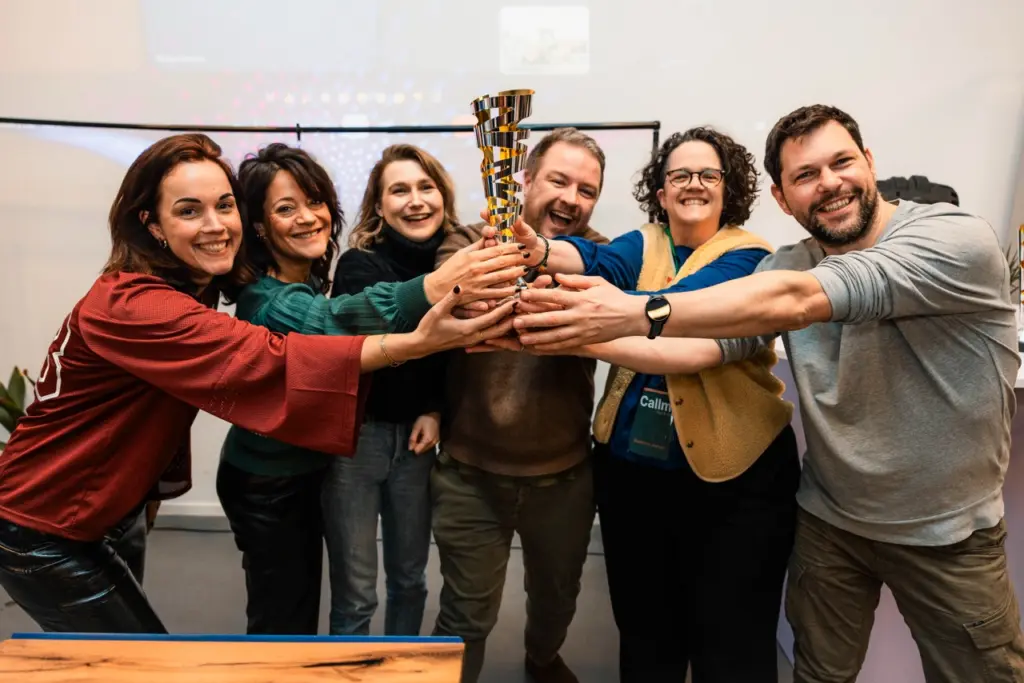
On Thursday afternoon, each team had to present a working demo. No fancy presentation: it just had to work. The jury assessed four criteria:
- how good is the demo;
- does it solve a real problem;
- is AI used intelligently;
- and would you want to use it yourself?
We had defined three levels in advance. Colleagues who had hardly worked with AI, colleagues who were already working with ChatGPT and custom GPTs, and colleagues who were already working with agents and tools such as N8N. In fact, everyone moved up at least one level. Colleagues who had never written a prompt on Tuesday were proudly presenting a working demo on Thursday.
One of our colleagues was demonstrating a wonderful agentic AI voicebot—or Voys bot 😉. The bot helped people who are afraid to make phone calls to practice conducting a telephone conversation in a safe environment. It included a brand name and a test phone number, which we could all use at that moment.
The biggest surprise had nothing to do with AI
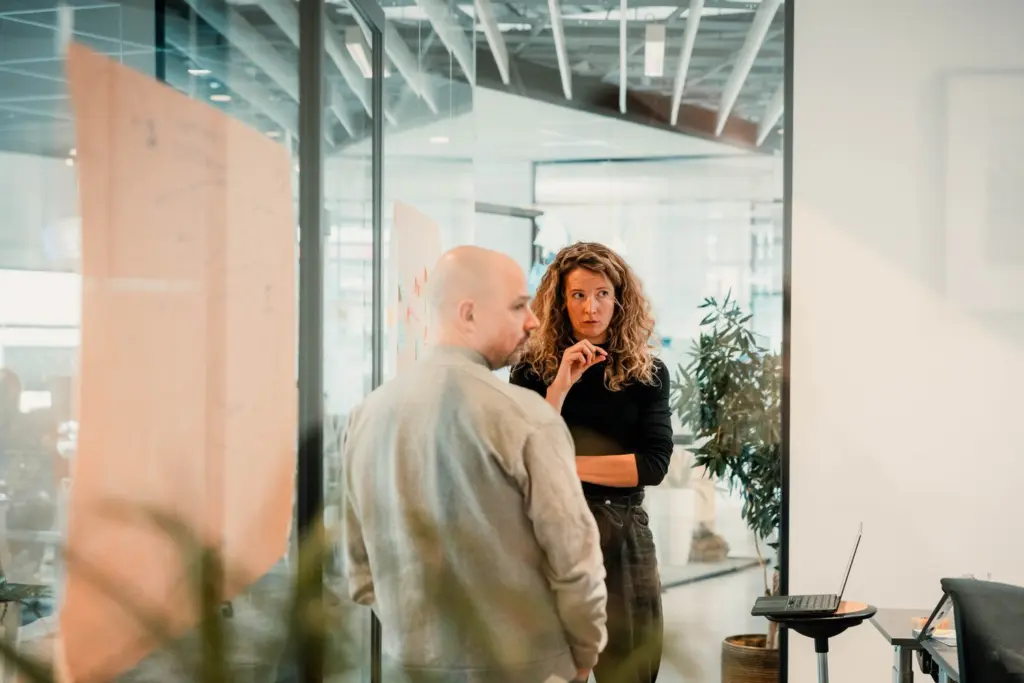
The biggest bonus of the event had little to do with AI: it was cross-functional collaboration itself. Sales colleagues consulting with developers, marketing looking over support’s shoulder. Someone from finance thinking from a product perspective. Mixed groups looking at the same problem from completely different perspectives. In three days, you can make progress that would normally take weeks.
AI was the theme of the hackathon. But even without AI, putting together cross-functional teams to solve real problems is hugely valuable. Seeing what happens when you bring people from different corners of your company together and give them the space to build: now that is valuable for everything you want to do as a company.
I wanted to experience this myself
For three days, as a coach, I watched teams go from zero to a working demo. That had an impact. If they can do this in three days, what can I build?
I wanted to create fully-fledged voice agents using only open source systems. A secure, private transcription service. And voice clones that you can use to create selection menus. Not with audio files, but by writing down what you want and having the audio generated in your voice.
To be honest, I thought it would be impossible to connect all the open source services you need for that. I was completely wrong. In three days, I built the entire system. Not at the prototype level, but as a mature service architecture.
I once built parts of the first version of the Voys system myself. It took five years before it developed into a mature platform. Now I tell the AI what I want and I see the application appear before my eyes. Front end, back end, and yes: the AI also tests that application itself.
It’s not in the tool, it’s in the question
“But AI often does such stupid things.” Yes, that’s true. It happens to me too. And actually, it’s almost always because I haven’t explained what I want properly. With the right questions, the right approach, and the right framework for asking those questions, the results are astonishingly good.
The learning curve is different for everyone. But the great thing is: you can use AI to learn how to work with AI. That sounds like a joke, but it’s the fastest way. And once you get the hang of it, you can build in a few months what a team would have taken years to build three years ago.

The downside: your mind can’t keep up
That enormous productivity has a downside that I want to be honest about.
When I’m hyperproductive, there’s no rest in my work. It’s just active thinking, deciding, and directing. All the more boring administrative and routine tasks, everything that used to be a mental break, are gone. What remains is purely cognitively demanding work, all day long.
Your mind can’t keep up with that. I’ve read a lot about it and received a lot of information from people who are deeply involved in this. We will have to look at knowledge work in a fundamentally different way. Not just at what we can do with it, but at what it demands of us.
What makes you truly irreplaceable?
This story began twelve years ago with a Slack message about AI. And it began again during the AI hackathon, when I saw sixteen teams build what they had considered impossible just three days earlier.
My advice to you: take a very critical look at your work. If writing software becomes so accessible and knowledge is truly democratized, what will remain of your company? Of your job?
I don’t have the answers. What I do know is that a colleague said this week that continuous learning and transferring that knowledge is perhaps the most important investment you can make. In yourself and in a company. That comment sticks with me.
I think we will only realize later that there was a time before and after AI. And that this AI Discovery Lab was the moment that difference emerged for us.
Would you like to read more stories like this and be the first to receive the lessons we learn as an organization in your inbox? You can sign up to my newsletter.
Lastly, I’d like to say this:
Thank you, Wouter. You were the driving force behind the event. What started as an idea in my head, you managed to translate into a fully-fledged event that was entirely ours. Lucas, without your tech skills and AI enthusiasm, we would have been nowhere. Big thanks. Dorin, you were the best coach in the right place. The way you convey knowledge and know exactly how much to say is admirable. Auke, thank you for supervising the event and bringing calm to something where hype can quickly take over. Christel, thank you for judging. Your knowledge and expertise, combined with your genuine wonder, were the best combination. And then a shout-out to Bart for your data knowledge and wonderful presentation on how the machine really works. And Judith, for your legal knowledge and dedication. It is thanks to you that we can work and handle the right data safely.